

Sustainable
It is time to work together towards Sustainable Development
Being sustainable means a real and sincere commitment to our own essence and also to the challenges the world faces today.
Commitment + Responsibility = Challenge
Are you up for the #BeingSustainable challenge?
Our focus is on the goals which require us to show commitment to other people. Other people means the people that we share our lives with and those who live around us, but also those who live far way, in circumstances very different from our own. People must be at the heart of development and responsible for it. We have the same origins, we belong to the same community – let us share the same vision of the future.
Our focus is on the comprehensive development goals which rely on a commitment to the most vulnerable, for as Paul VI affirmed in the encyclical Populorum Progressio: "Development cannot be limited to mere economic growth. In order to be authentic, it must be complete: integral, that is, it has to promote the good of every man and of the whole man." To reach these goals, we must commit to sustainable economic development, to enhancing equality of opportunity and to minimizing inequality.
Only by caring about people will we be able to build affluent societies. Our aim is to ensure our students graduate with the ability to think critically and to advocate for a society based on a true principle of Christian Humanism: the value of life. We want a sustainable society which offers opportunities to everyone. Pope Francis has described the opposite ends of human life as the "strength" and "memory" of the family, emphasising that "those who are unable to care for children and look after the elderly are people without a future, because they lack the strength and memory needed to move forward".
The Social Doctrine of the Church announced in the 1960s the impossibility of directly equating development with economic growth and community. For this reason, it is necessary to foster professionals with a commitment to others and in service of the common good. In the Encyclical Letter Fratelli Tutti, Pope Francis proposes, drawing inspiration from Saint Francis of Assisi, "a way of life with the flavour of the Gospel", in which we keep in mind both those near and far, for God "has created all human beings equal in rights, duties and dignity, and has called them to live together as brothers and sisters, to fill the Earth and to make manifest in it the values of goodness, love and peace."


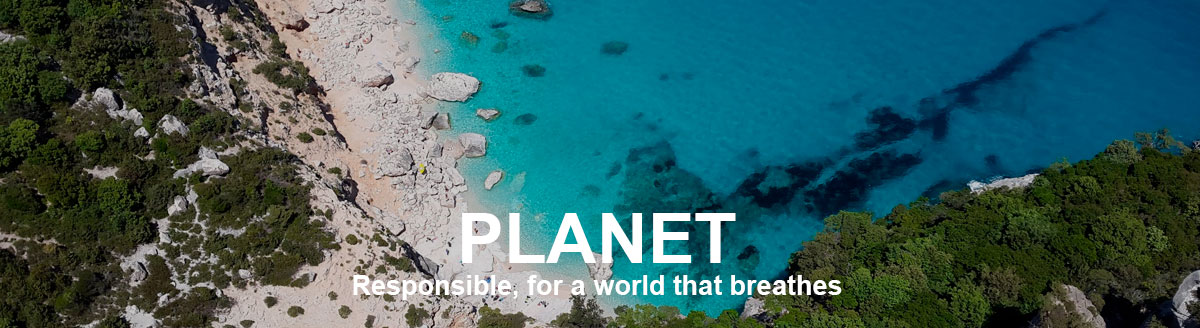
In his encyclical Laudato Si', the Holy Father Francis reminds us that our Sister Earth "cries out to us because of the harm we have inflicted on her by our irresponsible use and abuse of the goods with which God has endowed her." Our very bodies are made up of the elements of this planet, and so "nothing of this world is indifferent to us."
Overpopulation, forest policies, intensive agriculture or the rise of megacities are some of the trends that are putting the world economy to the test. But what should really concern us is the consequences: an exponential increase in CO2 emissions, increase in the global average temperature, species extinction or sea pollution are putting our survival to the test.
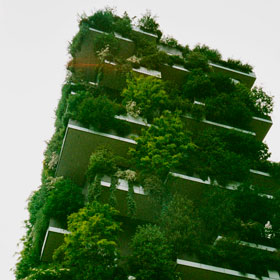
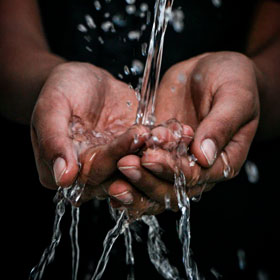
For this reason, a social reflection on the responsible use of natural resources is necessary. Because individual efforts and collective responsibility for sustainability also create value and not just for our planet. But also, for the people who inhabit it.

Nelson Mandela, the Nobel Prize-winning former President of South Africa, was forthright in his view on the value of education: "Education is the most powerful weapon which you can use to change the world." Any effort to create a better world must therefore strive for equality in education throughout the world.
Education is the key to improving everyone's future, especially that of the vulnerable. Education transforms lives, contributes to reducing inequality and encourages those who receive it to face the world and build societies that are more respectful and tolerant.
Our aim is to ensure our students graduate with the ability to think critically and to advocate for a society based on a a true principle of Christian humanism: the value of life. We want a sustainable society which offers opportunities to everyone. Pope Francis has talked about those at the opposite ends of life's journey as the "strength" and "memory" of the family, adding that "a people that doesn't take care of its elderly, its children and its youth has no future, because it abuses both memory and promise".
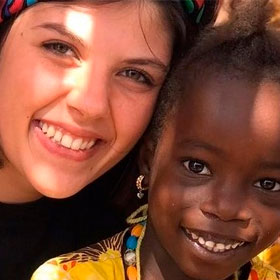
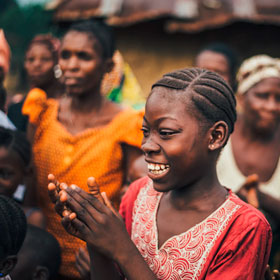
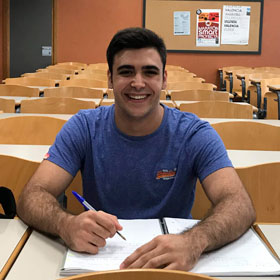
Smiles that enlighten
Teaching students and professors travel to Senegal to teach alternative pedagogy.

|
|
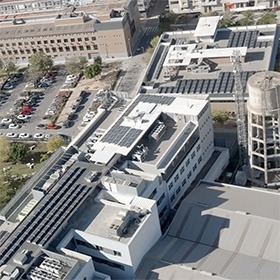
Clean energy on our campusesIn 2023, CEU Cardenal Herrera University took a decisive step towards decarbonisation by installing photovoltaic solar panels on several of its buildings. This action significantly reduces CO₂ emissions and advances the institutional commitment to a more sustainable energy model. The buildings where the installation has been carried out are:
Part of the project has been funded by the European Union's Next Generation Funds through the Valencian Regional Government. See information on funding |